
Carnival of the Nearly Extinct Animals is a kaleidoscopic performance experience celebrating a menagerie of animals faced with the dismaying possibility of being the very last of their kind; some have already ceased to exist except in memory. Featuring live music, dance, and puppetry, this evocative work weaves together the voices and environments of animals on the brink of extinction, creating a vivid musical journey that is both celebratory and urgent. Performances are paired with local community events, from volunteer days to panel discussions, offering audiences multiple points of engagement and opportunities for be a part of nationwide conservation efforts.
FEATURING

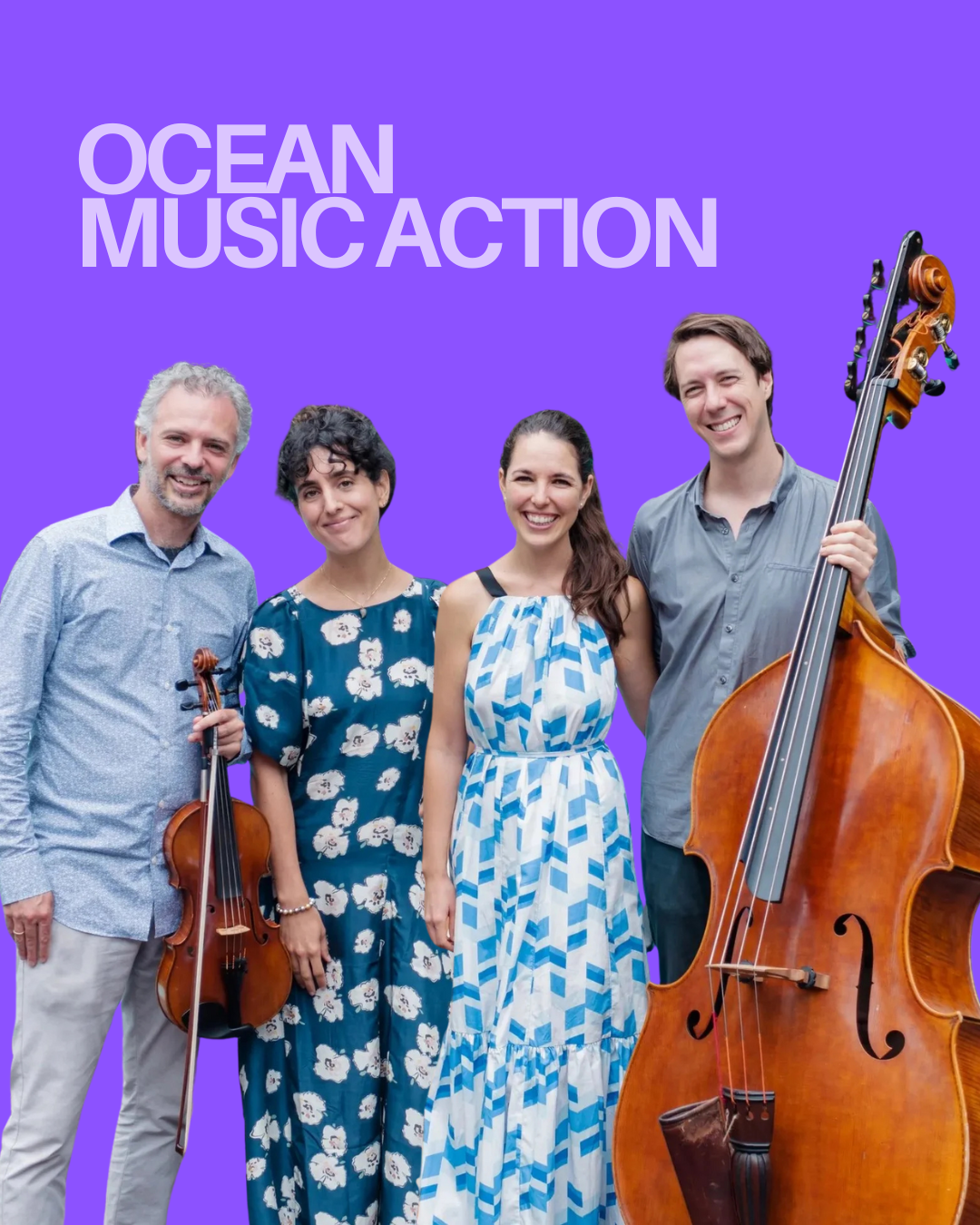

Within the ballet’s 14 movements, the audience will meet 13 species: their songs and environments translated by the musicians of Ocean Music Action, from the "tin trumpet" call of the Ivory-Billed Woodpecker and unearthly glissando of the Blue Whale to the fuzzy, frenetic hum of Honey Bees.
Structured as a sister piece to Saint-Saëns' iconic work, the length and number of movements are identical, and paired movement subject matter allows for myriad ways of programming this new work alongside its namesake as well as independently.
The piece will be written with all ages in mind so that the work can easily be programmed on both children’s and subscription series.
An informational page containing more details on these endangered species and their recorded sounds will be on this website throughout the work's premiere season. Audiences will be able to learn more about the magic of these animals long after experiencing them–and in some cases, meeting them for the first time–on this aural, visual, and kinetic canvas.
INSTRUMENTATION
Violin, Cello, Bass, Flute, Harp, and Percussion
Includes optional narrator part written by poet Jessica Lynn Suchon.
LENGTH + TIMELINE
Length: ~25 minutes (same length as the original)
Movements: 14
Premiere Season: 2026/27
movements
VII. Coral
When conditions such as the temperature change, corals expel the symbiotic algae living in their tissues, responsible for their colour. A spike of 1–2°C in ocean temperatures sustained over several weeks can lead to bleaching, turning corals white. If corals are bleached for prolonged periods, they eventually die. Coral bleaching events often lead to the death of large amounts of corals. The bleaching of the Great Barrier Reef in 2016-17 killed around 50% of its corals. Coral reefs are estimated to directly support over 500 million people worldwide, who rely on the ecosystem they support for daily subsistence, mostly in poor countries. A 2015 study projected that the climate-related loss of reef ecosystem services will cost US $500 billion per year or more by 2100.
VIII. the blue Whales
The blue whale is the largest animal on the planet, weighing as much as 200 tons (approximately 33 elephants). The blue whale has a heart the size of a Volkswagen Beetle. They are the loudest animals on Earth, with their calls reaching 188 decibels. (a jet reaches 140 ).. Their low frequency whistle can be heard for hundreds of miles. During the 20th century, the blue whale was an important whaling target and the ~10,000-25,000 that exist today are just 3-11% of their population as of 1911.
IX. The Ivory-Billed Wood PeckerS
Destruction of the woodpecker's mature or old-growth forest habitat caused populations to decline, and by the 1880s the species was rare. Forest destruction accelerated during the World War I and II war efforts, destroying much of its habitat. The last universally accepted sighting of an American ivory-billed woodpecker occurred in 1944.
X. the Passenger Pigeons
In May 1850, a 20-year-old Potawatomi tribal leader named Simon Pokagon was camping at the headwaters of Michigan’s Manistee River during trapping season when a far-off gurgling sound startled him. It seemed as if “an army of horses laden with sleigh bells was advancing through the deep forests towards me,” he later wrote. “As I listened more intently, I concluded that instead of the tramping of horses it was distant thunder; and yet the morning was clear, calm, and beautiful.” The mysterious sound came “nearer and nearer,” until Pokagon deduced its source: “While I gazed in wonder and astonishment, I beheld moving toward me in an unbroken front millions of pigeons, the first I had seen that season.” Wild flocks of up to a billion passenger pigeons would darken the sky above you as they flew by. Martha, the last passenger pigeon, died in 1914 at the age of 29.
I. The tigers
At the beginning of the 20th century, there were 100,000 tigers in the world. Today, this number is estimated to have dwindled to around 3,300 due to poaching and a steady decrease in forests/forest cover in their natural habitats.
II. The Bees and butterflies
In North America, you are nearly 50 percent less likely to see a bumblebee in any given area than you were prior to 1974. Research and modeling suggests that this decline is driven in large part by climate change.
III. the Polar Bears
While polar bears are only marked as a “vulnerable” species, they have become a symbol for the need for awareness of climate change, and the decline of sea ice will lead to a decline in the total population of polar bears of about 30 percent by 2050
IV. the Hawksbill Turtles
Hawksbill turtles are found throughout the tropical waters of the Atlantic, Pacific, and Indian Oceans. Their diet consists mainly of sponges that live on coral reefs. Today, loss of coral reef habitat around the world is the primary threat to hawksbill turtles. Melodies foreshadowing the upcoming movement on Coral.
V. the ELEPHANT
The latest assessments highlight a broadscale decline in African elephant numbers across the continent. The number of African forest elephants fell by more than 86% over a period of 31 years, while the population of African savanna elephants decreased by at least 60% over the last 50 years, according to the assessments.
Both species suffered sharp declines since 2008 due to a significant increase in poaching, which peaked in 2011 but continues to threaten populations. The ongoing conversion of their habitats, primarily to agricultural and other land uses, is another significant threat.
VI. the Black Rhinos
Around 1900 there were probably several hundred thousand black rhinosauroliving in Africa. In the early 1990s the number dipped below 2,500, and is now up to ~4,000.
XI. the Grey Wolves
After being decimated by hunting by the 1930s, American Grey Wolf conservation efforts began in 1974 and thanks to reintroduction and protections, the population has now reached 10% of its former numbers. In October 2020, Endangered Species Act protections were removed for all gray wolves in the lower-48 states except for a small population of Mexican gray wolves in Arizona and New Mexico. The U.S. Fish and Wildlife Service made its decision despite the fact that wolves are still functionally extinct in the vast majority of their former range across the continental U.S.
XII. the American Buffalo
Before europeans came to the United States, there were an estimated 30 to 60 million buffalo in existence. By 1802, pushed out by settlers and pioneers, they disappeared completely in Ohio. Mass destruction began in the 1830s, and our railroads were built with bison as fuel: they were killed to feed workers. In 1871, the process of tanning hides was discovered and bison could now be hunted year round. 5,000 buffalo killed every day in 1872. They were killed for their hides, which sold for $1.25 a piece…the rest of the bison was left to rot. It was said that you could walk 100 miles along the Santa Fe railroad by stepping from one bison carcass to another. By 1883, all but ~200 buffalo had been destroyed. Thanks to cultivation efforts, there are now ~500,000 in existence
XIII. the kahuli
The kāhuli snail has long been revered by Hawaiians, their ornate shells once covering the trees of Hawai‘i with so abundantly that you could hear an eerie, magical song arising from the forests—possibly made by wind swirling through their shells or the shells bumping against each other. Kāhuli tree snails were once so plentiful in Hawaii that collectors used them to make lei. This led to the initial decline of the snails, but the biggest threat now is predation from non-native species. This problem is compounded by the fact that kāhuli tree snails are slow-growing and slow to reproduce, so they can’t replenish their numbers faster than they’re being eaten. All of the 42 kāhuli species in the genus Achatinella are either federally listed as endangered or extinct. More info.
XIV. Finale
*sources include worldwildlife.org, nationalgeographic.com, audubon.org, and others. Stephanie will be working with several experts on these topics during her research process for this piece to ensure that her program notes are up-to-date, relevant, and helpful
MEET GREG CORBINO
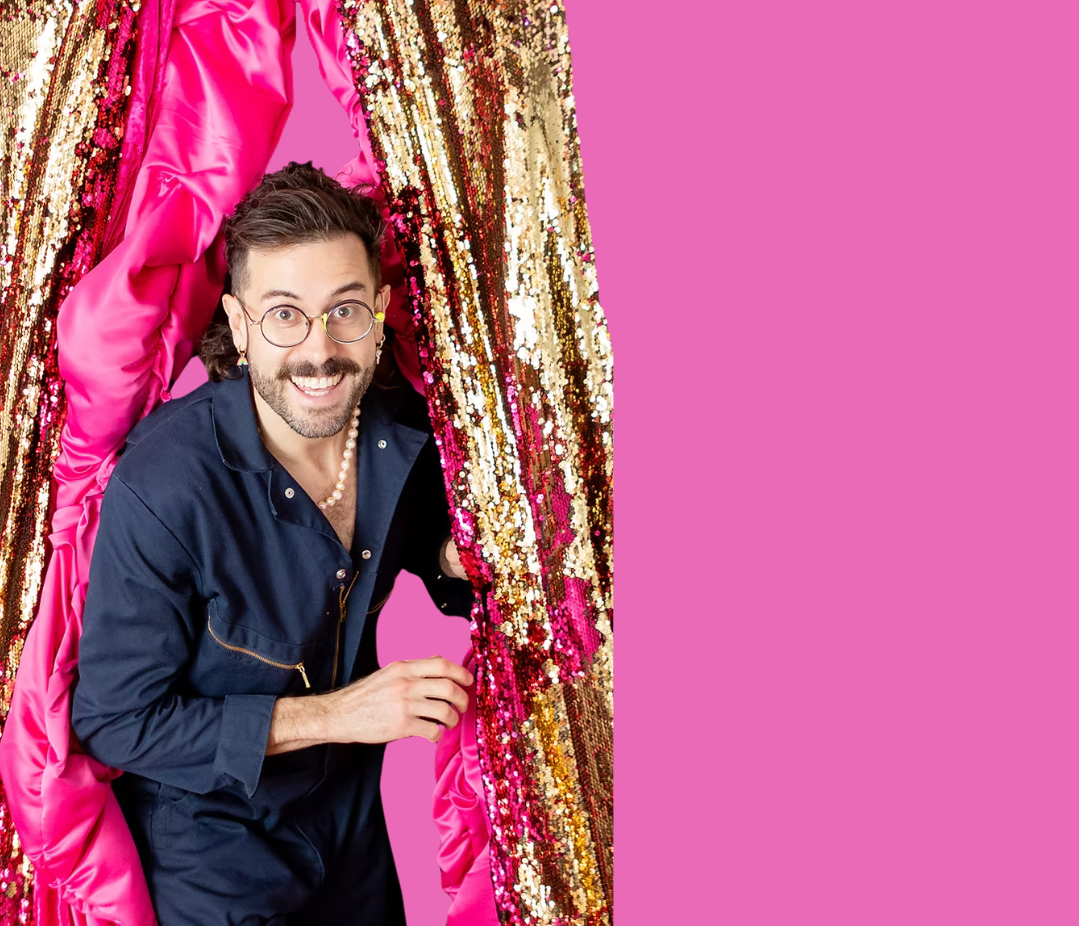
GREG CORBINO is an OBIE award winning New York based designer specializing in puppetry, large-scale installation and performance in public space. His designs have been called “gorgeously baroque” by The New Yorker and “crafty and audacious” by The New York Times. His work has been presented in New York at Soho Rep (It’s That Time of the Month, Give Me Carmelita Tropicana (2025 Henry Hewes Design Award for Puppetry Design) The Great Privation), The Brooklyn Academy of Music (Cumulus Frenzy), Ars Nova (Heaux Church), The High Line, The Architecture League of New York, The Queens Museum, The Leslie Lohman Museum of Art, HEREarts, Guild Hall, Art Yard, and nationally at Notre Dame Shakespeare Festival (As You Like It), The Detroit Institute of Art and The Smithsonian Institution. Internationally, his work has been presented at QueerLab (Rome), Duncan Dance Research Center (Athens, Greece) Togo Village Art Museum (Togo, Taiwan), Other Music Academy (Weimar, Germany), and Festival Mondial des Théâtres de Marionnettes (Charleville-Mézières, France).
His ongoing public space puppet performance, MURMURATIONS, draws attention to the environmental impact of plastics with giant puppets crafted of plastic trash collected from New York shorelines and has been supported by the Lower Manhattan Cultural Council, Riverkeeper, Greenpeace USA and a 2025 Grant from the New York State Council on the Arts. Collaborators have included Peter Schumann and The Bread and Puppet Theater (2007-present), Reverend Billy and The Stop Shopping Choir, Becca Blackwell, Branden Jacobs Jenkins, Alina Troyano, Eric Ting, Jennifer Miller, Xaviera Simmons, Charlotte Brathwaite, Sanford Biggers, Sarah Holdren, Cecilia Vicuña and Becca Blackwell. He has a B.A. in Theater Studies from Emerson College and lives and works in Brooklyn where he dreams of designing a queer carousel.
MEET MEGAN CONLEY
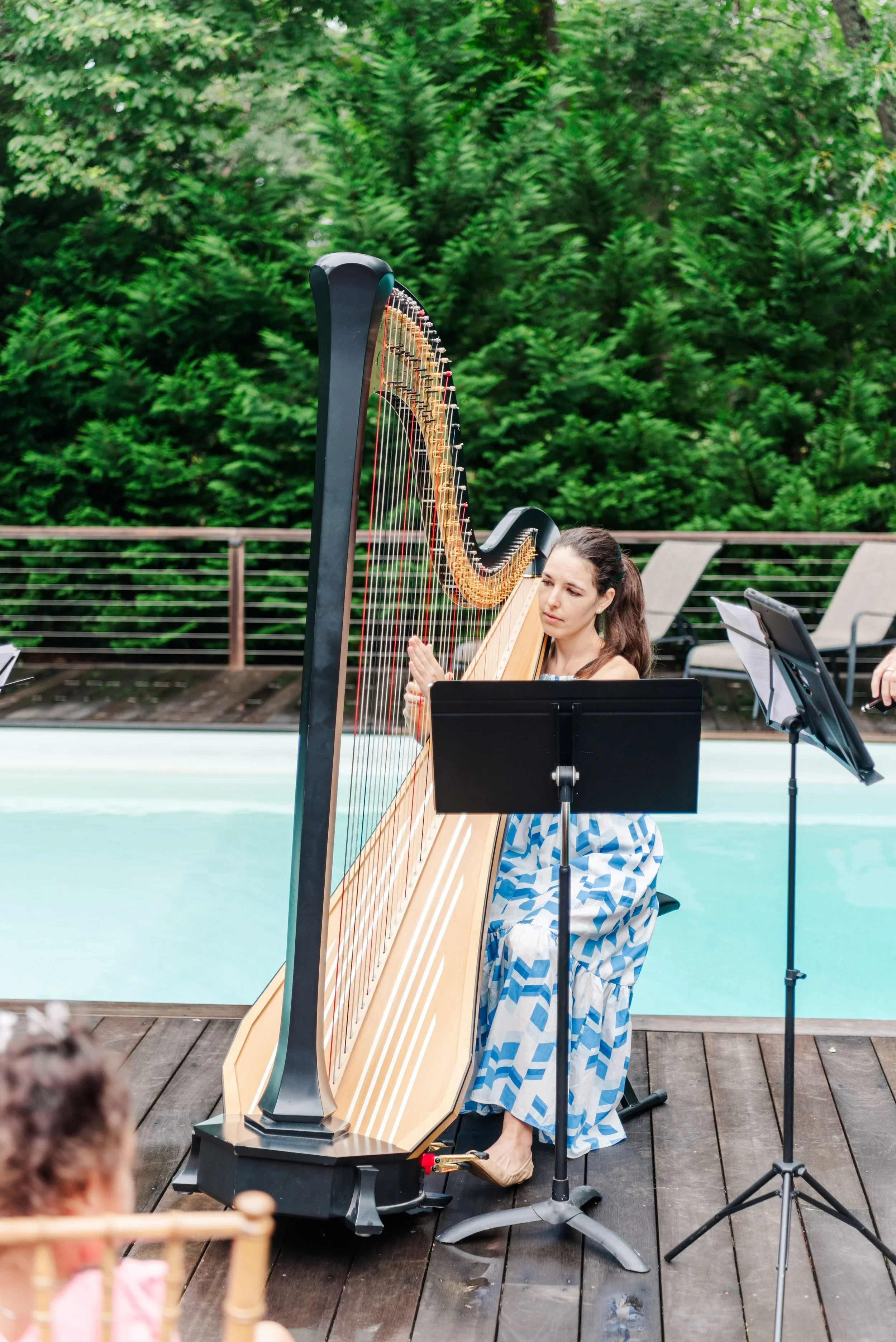
Megan Conley is a Hawaii-based harpist and the founder of Ocean Music Action, a nonprofit dedicated to using music to promote action for the planet.
Megan had a musical upbringing in Austin, Texas, where she began harp lessons at the age of five. The daughter of Austin musician Danny Levin, she grew up playing music with her father and siblings in the family band. By the time she was 15 she had played on several albums of Austin musicians, including the Grammy Award-winning album ‘Los Super Seven.’
Megan received her Bachelor and Masters degrees in Music Performance from Rice University. In 2005, she was awarded a Fulbright Grant to study at the Ecole Normale de Musique in Paris, France. In 2012, Megan won first place in the International Ima Hogg Concerto Competition, and subsequently performed the Ginastera Harp Concerto with the Houston Symphony.
Megan served as the Principal Harpist of the Houston Symphony from 2015-2022. In the wake of the Coronavirus pandemic, she created a 6-video series for the symphony, ‘Mornings with Megan,’ which offers educational musical content for young children.
As a member of the chamber orchestra The Knights, Megan often performs in NYC, including regular engagements at Carnegie Hall. She has performed with the New York City Ballet, the Orchestra of St. Luke's, the International Contemporary Ensemble, the Bang On a Can All-Stars, and the Sarasota Opera, as well as touring with the Irish Chamber Orchestra. She also performed regularly as a substitute for the Broadway show 'The Fantasticks.'
Megan is the president and artistic director of Ocean Music Action (OMA), a nonprofit founded in 2021. This organization uses music to build community and inspire action to protect our oceans. OMA concerts are paired with volunteer activities, giving the musicians and audience opportunities to join together in helping the planet. Learn more at oceanmusicaction.org.
Megan lives in Honolulu, Hawaii with her husband, bassist Shawn Conley, and their young son.
MEET John heginbotham
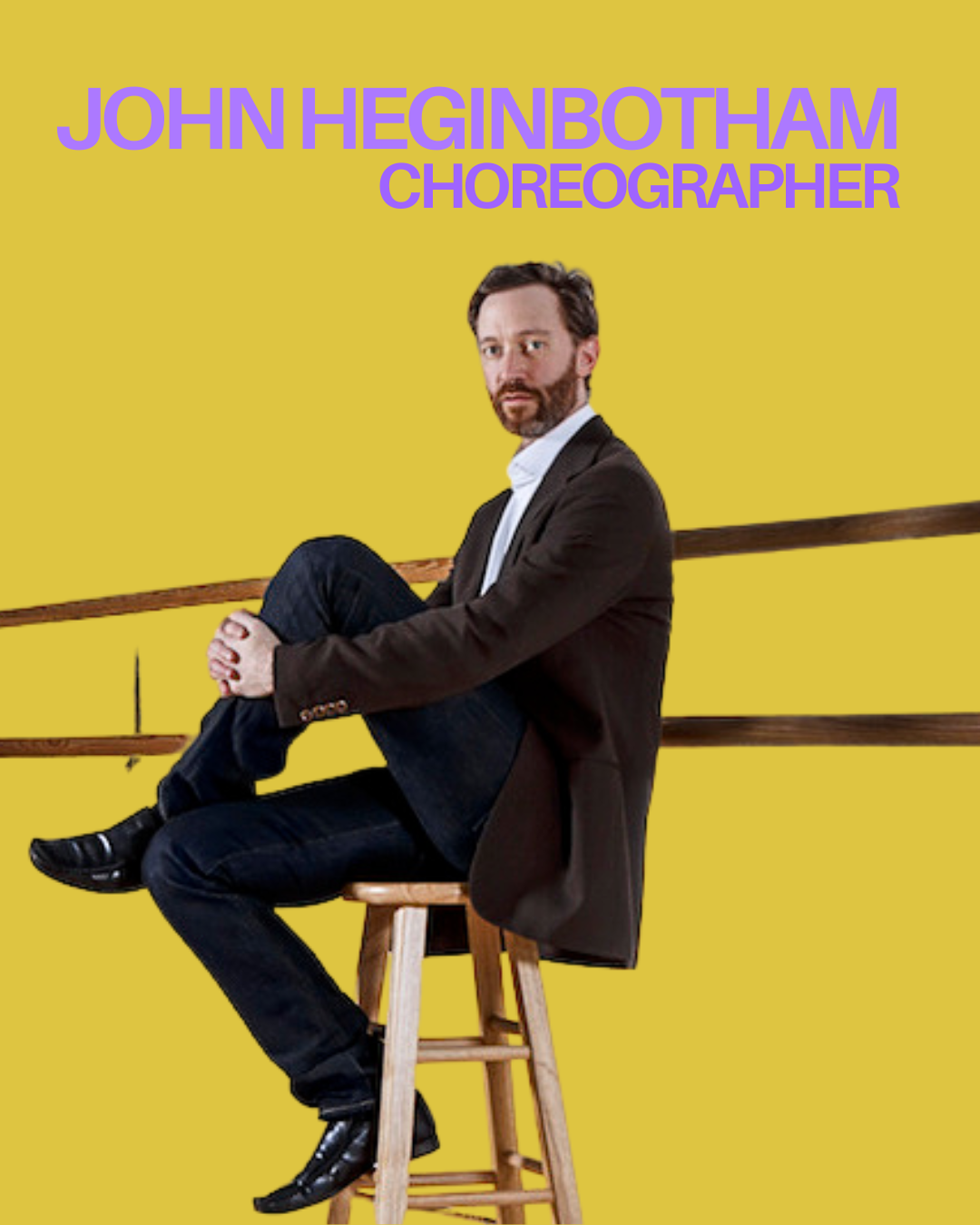
Originally from Anchorage, Alaska, John Heginbotham (he/him) is a Brooklyn-based choreographer, performer, and teacher. John graduated from The Juilliard School in 1993 with a BFA in Dance, and was awarded the Martha Hill Prize for Sustained Achievement in Dance. John was a member of the Mark Morris Dance Group (MMDG) from 1998–2012, performing lead roles in L’Allegro, il Penseroso, ed il Moderato; The Hard Nut; Four Saints in Three Acts; and Romeo and Juliet: On Motifs of Shakespeare. During his time with MMDG, he toured across the United States and abroad alongside artists including Mikhail Baryshnikov, Yo-Yo Ma, Emanuel Ax, The Bad Plus, and Zakir Hussain, and performed with opera companies including The Metropolitan Opera, New York City Opera, and the English National Opera.
John founded Dance Heginbotham in 2011 and the company quickly gained recognition for its unique blend of inventive, thoughtful, and rigorous dance theater works. John received a 2018 Guggenheim Fellowship and the 2014 Jacob’s Pillow Dance Award in recognition of his unique choreographic vision and promise. John was a Research Fellow at the National Center for Choreography at The University of Akron (NCCAkron), was awarded a 2017/18 New York City Center Choreography Fellowship, was a 2016 Fellow at NYU's Center for Ballet and the Arts, and is a two-time recipient of the Jerome Robbins Foundation New Essential Works (NEW) Fellowship (2010, 2012).
In addition to his work with Dance Heginbotham, John is active as a freelance choreographer. His work on Episode 1 “Meet the Family”, Season 3 of Netflix’s hit series The Umbrella Academy, was nominated for a World Choreography Award in the Best Television Episodic category. He created a new ballet, RACECAR, for The Washington Ballet as part of their NEXTsteps series in October 2019. In 2015, John choreographed Daniel Fish's highly-acclaimed Bard SummerScape production of Oklahoma!, which received its New York City Premiere at St. Ann's Warehouse in October 2018, and opened on Broadway at Circle in the Square on April 7, 2019 for a limited engagement through January 2020. Oklahoma! won the 2019 Tony Award for Best Revival of a Musical and completed a National Tour throughout the US in 2022. Oklahoma! enjoyed an acclaimed run in London at the Young Vic Theatre in 2022 and opened on London’s West End at Wyndham’s Theatre in February 2023, receiving the 2023 Olivier Award for Best Musical Revival. In Fall 2024, John choreographed the new Off-Broadway musical, Music City, presented by Bedlam Theater.
In 2016, John was invited to return to Bard to create the evening-length work Fantasque in collaboration with renowned puppeteer Amy Trompetter. Fantasque had its New York City premiere at the Skirball Center for the Performing Arts in November 2018. In 2016, he was commissioned to create First for Juilliard Dance: New Dances. In July 2014, John created his first ballet, Angels’ Share, for Atlanta Ballet’s Wabi Sabi Project. In December 2013, he choreographed Isaac Mizrahi’s Peter & the Wolf for Works & Process at The Guggenheim, which has become an annual holiday event. John and Isaac’s collaboration continued in 2022 with the creation of Third Bird for Works & Process, performed to a commissioned score by Nico Muhly. John’s work has been featured in the music videos of Fischerspooner and NICKCASEY, and in the live performances of cabaret artists Lady Rizo and Our Lady J.
John’s growing list of opera commissions include: La Traviata at San Francisco Opera (2022) and LA Opera (2024); John Adams’ Girls of the Golden West, directed by Peter Sellars, at San Francisco Opera (2017) and Dutch National Opera (2019); Candide with the Orlando Philharmonic (2016) and The Knights (2018, 2019); The Magic Flute at the Opera Theatre of St. Louis, directed by Isaac Mizrahi (2014); Handel’s Alceste with the American Classical Orchestra (2014); Macbeth with the Manhattan School of Music Opera Studies Department (2014); and Maria de Buenos Aires at the Cork Opera House (2013).
As a teacher, John offers dance master classes in the United States and abroad. He has taught at institutions including Princeton University, Barnard College, George Mason University, Laban Centre in London, School of Visual Arts, University of California, Berkeley, University of Illinois at Urbana-Champaign, and the University of Washington. He was invited to give the keynote address to the Utah Dance Educators Conference in November 2016. John is the Director of the Dartmouth Dance Ensemble, and is a founding teacher of Dance for PD®, an ongoing collaboration between the Mark Morris Dance Group and the Brooklyn Parkinson Group.
MEET STEPHANIE ann boyd

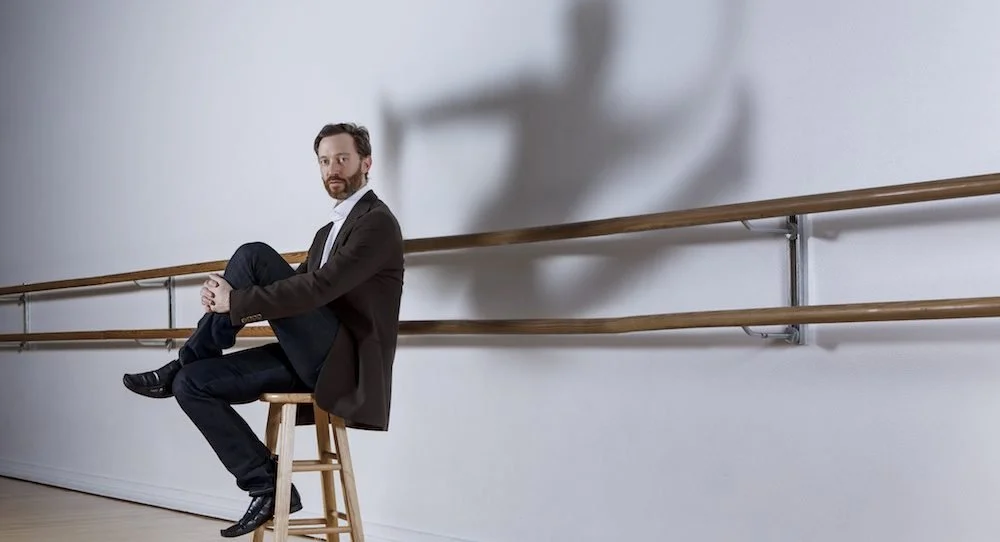
Michigan-born, Manhattan-based American composer Stephanie Ann Boyd (b. 1990) writes melodic music about women’s memoirs and the natural world for symphonic and chamber ensembles. Her work has been performed in nearly all 50 states and has been commissioned by musicians and organizations in 37 countries. Boyd’s five ballets include works choreographed by New York City Ballet principal dancers Lauren Lovette and Ashley Bouder and include a ballet commissioned for the grand opening of the TWA Hotel at JFK Airport. Stephanie’s music has been praised as “a racing, brassy score” (New York Times), “attractive lyricism” (Gramophone), “[with] ethereal dissonances” (Boston Globe), “[music that] didn’t let itself be eclipsed” (Texas Classical Review), and “arrestingly poetic” (BMOP).
Current commissions include a concerto for Anthony McGill, principal clarinet of the New York Philharmonic, a new reed quintet for Akropolis, and the second book of Flower Catalog Piano Preludes.
Recent commissions and premieres include a work inspired by Betty Friedan entitled Everywoman, with Kennedy Center President Deborah Rutter, mezzo-soprano Michelle DeYoung, and 2022 Indianapolis Competition winner Sirena Huang as soloists and commissioned by the Peoria Symphony Orchestra with George Stelluto; Julia Louisa Esther: a Suffragette Symphony commissioned by the Wyoming Symphony Orchestra with Christopher Dragon, the premiere of which was the subject of a documentary on Wyoming PBS in 2022; Alleluia Olora commissioned by Astral Artists for cellist Tommy Mesa; Aurora, commissioned by the Kurganov-Finehouse Duo, and others.
Stephanie grew up as a violinist in the Ann Arbor, Michigan string world. One of the last students of renowned pedagogue John Kendall, she was a member of the Pioneer High School Symphony Orchestra, the Michigan Youth Symphony Orchestra, and the Blue Lake International Youth Symphony Orchestra.
A graduate of the New England Conservatory, Boyd is a member of the Iceberg New Music composers collective. For concert premieres and red carpet appearances, she is usually dressed by MILLY creator Michelle Smith or Boston-based designer Sasha Parfenova. Stephanie intensely adores jazz big band screaming trumpets, the smell of camp fires and old cars, that moment when planes leave the ground during takeoff, and reading contemporary fiction novels (gotta stay up to date with the latest storytelling architecture innovations!) next to her fluffy black cat, Petra.
*A special note for Carnival: thanks to her parents deciding to become vegetarian when she was two months old, Stephanie has been a vegetarian her entire life! This whole idea of being incredibly sensitive to not-harming-but-helping the animal kingdom has been a core principal of Stephanie’s life/weighing on Stephanie’s heart from the very beginning.
MEET JESSICA

Jessica Lynn Suchon is a poet, librettist, and playwright located in Philadelphia, PA.
She is the author of Scavenger, winner of the YesYes Books Vinyl 45 Chapbook Contest. Jessica has received honors from The Aspen Institute, the Academy of American Poets, and Best New Poets. Individual poems have appeared in Copper Nickel, Willow Springs, Ninth Letter, Yemassee, and RHINO Poetry, among others. She received her MFA in poetry from Southern Illinois University.
Jessica was a 2019 Tennessee Playwrights Studio Fellow. Her full-length play Shopgirls premiered at the Darkhorse Theater Chapel in Nashville, TN. Her voice acting has been featured in the podcast Dear Murder Street as well as various advertisements and informational videos.
In her longstanding collaborative partnership with American composer and former high school classmate, Stephanie Ann Boyd, Jessica has written librettos that have premiered internationally and been featured everywhere from national newspapers to textbooks.
CREATING COMMUNITY
through this piece and project
AT THE PERFORMANCE
PHOTOBOOTH WALL
Presenters will be able to use Sasha’s Carnival artwork to make a “Photo Booth” wall/photo backdrop for their lobbies to enhance presenters’ social media presence via audience members tagging them in these photos, and to spread the ballet and its message.
LOOKBOOK
There will be an interactive lookbook on this website, accessible via a QR code in the program notes, that goes deeper into the grander story of these animals, process of turning these stories into music, and as Stephanie will be consulting several conservation experts during her research process for this piece, this lookbook will contain relevant, up-to-date information on the most practical ways to get involved in conservation efforts if one wishes to.
See Stephanie’s Flower Catalog Lookbook.
BEFORE THE Performance
CARNIVAL COVER ART
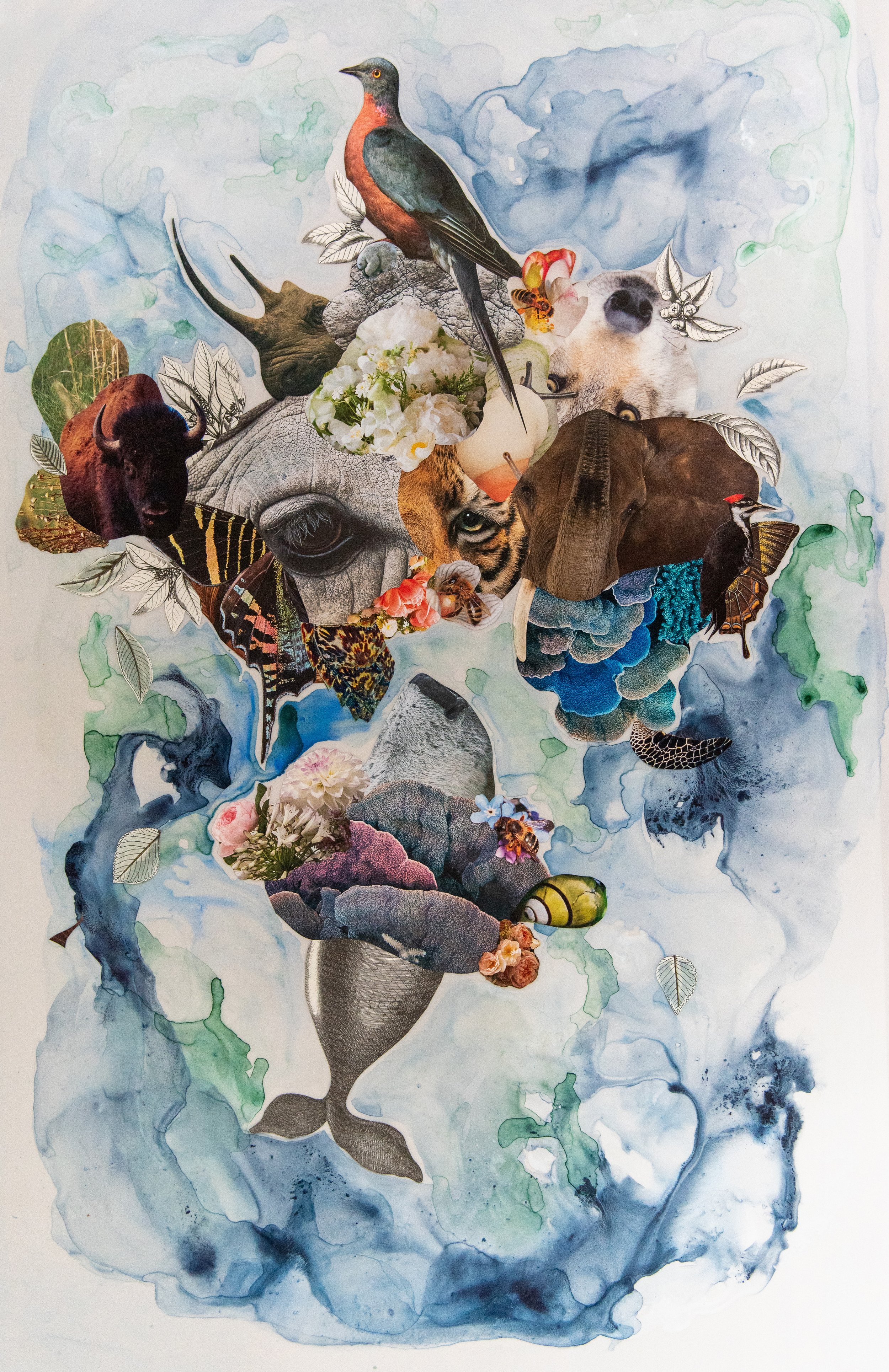
Stephanie worked with artist Sasha Parfenova to create a new collage artwork inspired by the inhabitants of Carnival to be used as score cover art/concert marketing graphic/however presenters are excited to use it.
FOR AUDIENCES ONLINE
Behind the Stage Series: 13 instagram reel/tiktok videos telling the stories and secret program notes behind the writing of each movement, posted on Stephanie’s social media accounts with presenters tagged.
Personalized introductions: a short video of Stephanie introducing Carnival and herself to your community and online audiences, made available to presenters for use by their marketing departments for their socials, newsletters, websites, etc.